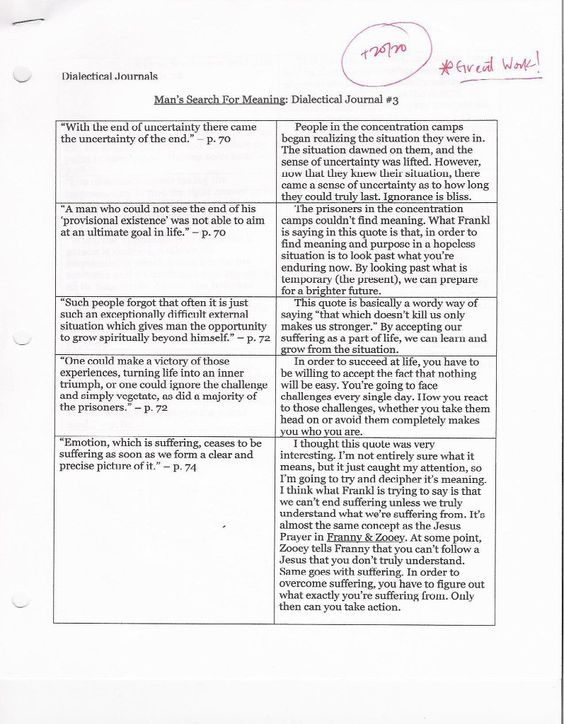
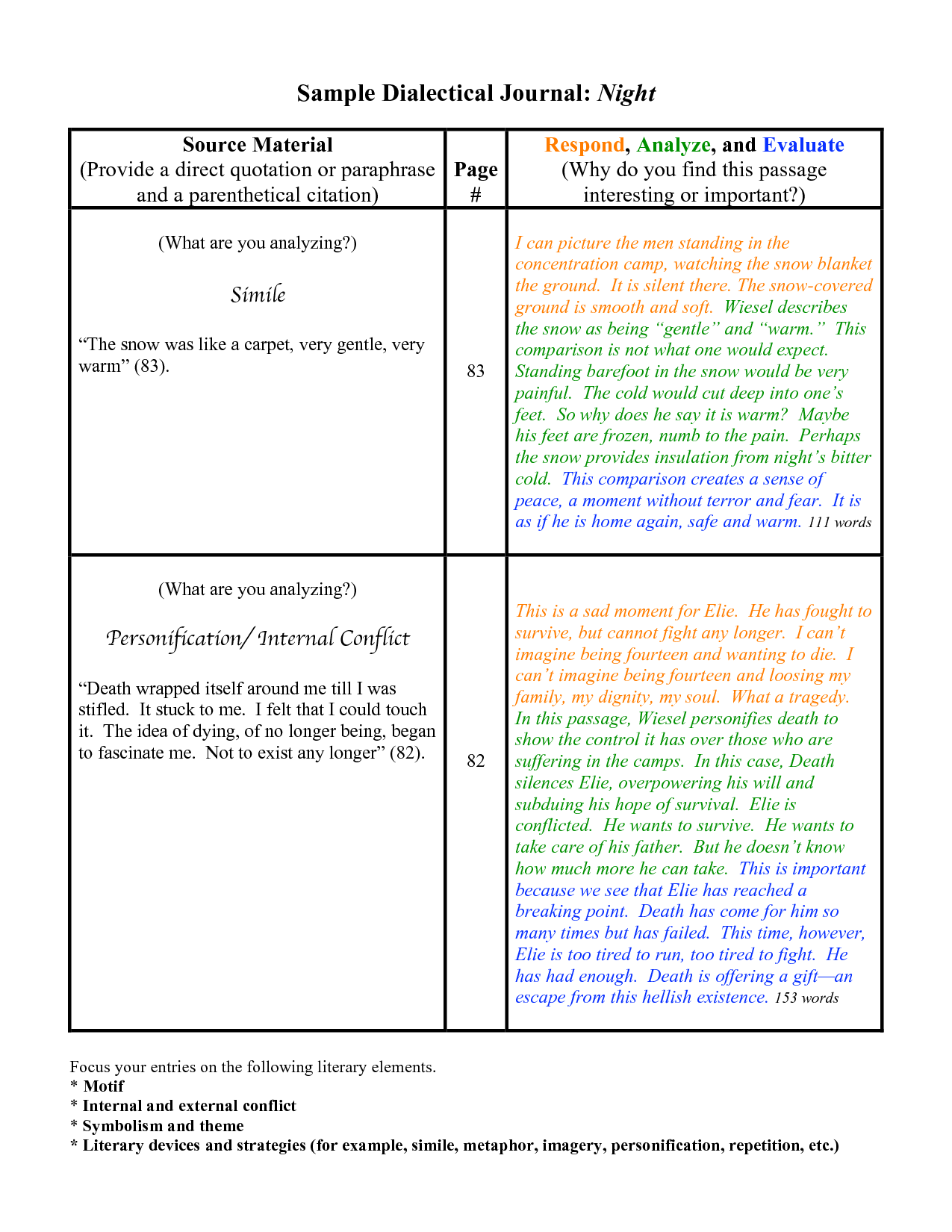
Do not panic! Dialectical Journaling is not hard as it may seem. It is quite simple. The “How to Annotate” lesson from class (please refer to your notes on when to utilize specific highlighters/sticky notes) should be a great help for the journaling. You are already reading looking for vocabulary, problems, solutions, and evidence (including questions you may have while you are reading). It is a written conversation between you and the author. Always keep track of the rhetorical devices being used in your readings. Do not forget the examples in your composition book we did as a class. No fear,
 Shakespeare, help is here and I have included some examples to help you below.  Do not procrastinate. Try to do your journals as they are assigned. Keep track of your thoughts. Again, keep track of your thoughts. This is very vital. If you read and forget what you read, you may have to read everything over again. Never depend on class discussion to write your journal. It would be very obvious if you waited until then to write it:
1. Everyone does not think alike.
2. It would be quite suspicious bits and pieces of the classroom discussion is in your journal. Only way this would be possible is if we did it as a class. and so forth.
3. The next step would be to keep track of highlights and/or questions you may have. Always ask questions as you are reading. Keep track of these questions in your composition book.
4. Next, you want to only choose quotes from the work, which will produce critical thinking. Plagiarism is never an option. Use your own thoughts and words. I have read pretty much everything from Spark Notes to Genius, etc. Just do not do it. You will receive a 0. Again, use your own words and thoughts. Plagiarism should never be an option. Synthesize your own understanding of the text at all times.
The set up:
You can fold your paper in half by labeling one side Text and the other side Response. Depending on how this goes the first few times, I may print a template for you all. Write how the rhetorical device aides the author, questions you may have, and your understanding of the quote you chose and your overall thoughts on the reading thus far. Do not forget the purpose paragraph. Tell me what you believe the Author’s Purpose is. You may write on the back, but do not use ink as it will bleed into the front of the page.
Remember, a good writer is always making active decisions! Choose wisely!